Acute Bipolar Disorder: What It Means, Warning Signs, and What to Do Next
When people search for acute bipolar disorder, they are often trying to name something that feels sudden, intense, and hard to sort out. A person may seem unusually energized, unable to sleep, deeply depressed, agitated, impulsive, or emotionally unlike their usual self. "Acute" is not a separate type of bipolar disorder. It usually means a mood episode or flare-up needs timely attention because symptoms are stronger, riskier, or more disruptive than usual. If you are trying to understand your own mood pattern, a free bipolar screening tool can be a gentle first step, but it cannot replace a full professional evaluation. This guide explains what acute changes can look like, when to seek urgent support, and how to prepare for a clearer conversation with a clinician.
What "Acute" Means in Bipolar Disorder
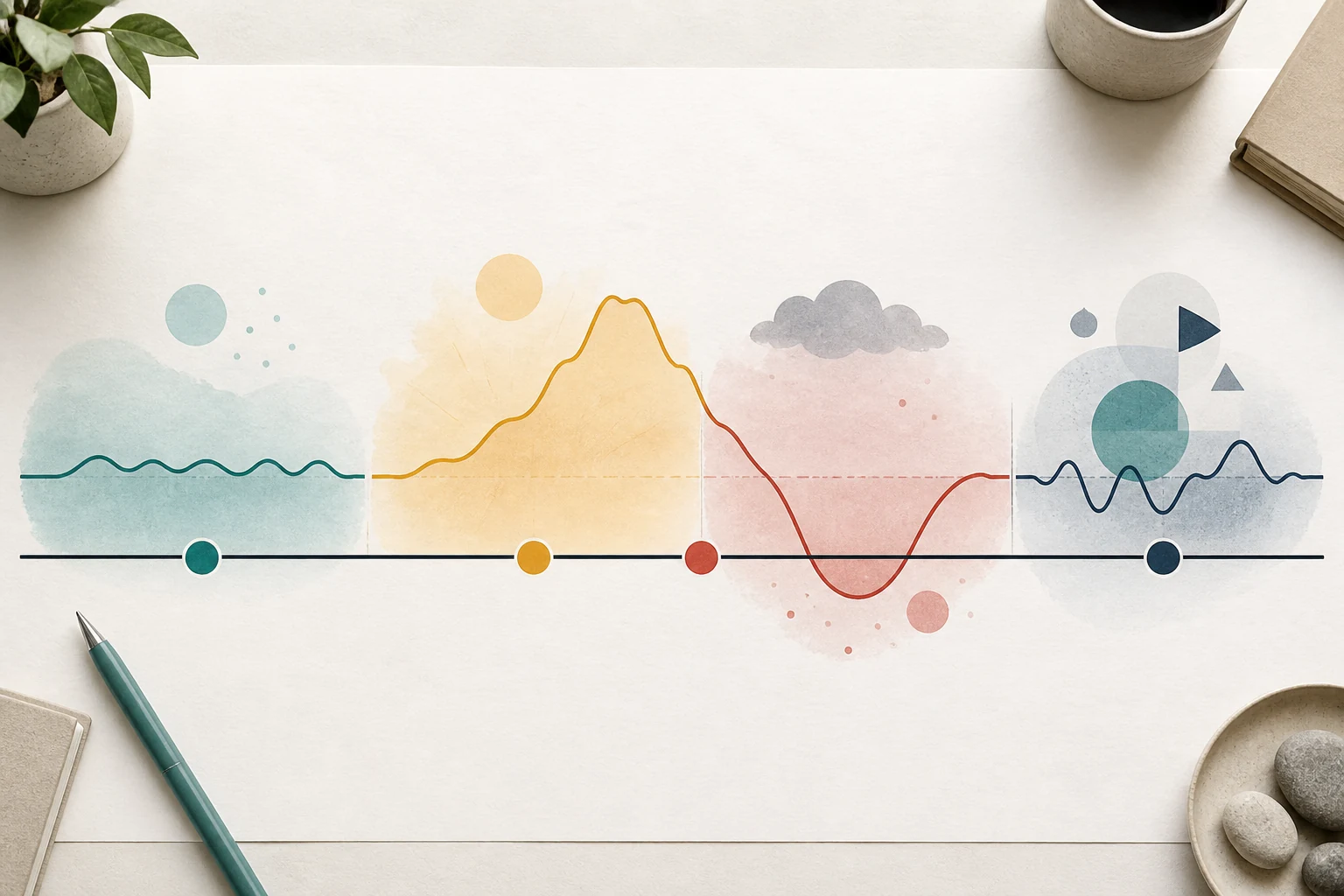
In everyday language, acute means something has become intense enough to need attention soon. In bipolar disorder, that may refer to an acute manic episode, an acute depressive episode, an acute mixed episode, or a sharp worsening of symptoms in someone who already knows they live with bipolar I, bipolar II, cyclothymia, or another bipolar-related condition.
The key idea is change from baseline. A person who usually sleeps seven hours may sleep two hours and feel wired. Someone who is usually careful may spend beyond their means, drive recklessly, or make sudden life decisions. Another person may become slowed down, hopeless, unable to function, or unable to stop restless, painful thoughts. Acute bipolar symptoms are not just "having a mood." They are changes in mood, energy, sleep, thinking, and behavior that last beyond ordinary ups and downs and interfere with life.
Clinically, bipolar disorder is defined by mood episodes. Bipolar I involves at least one manic episode. Bipolar II involves hypomanic episodes and major depressive episodes, without a full manic episode. Cyclothymia involves chronic mood fluctuation with milder highs and lows. Some people ask about "the 7 types of bipolar disorder," but major medical sources usually group the condition into bipolar I, bipolar II, cyclothymic disorder, and other specified or unspecified bipolar and related disorders. Subtypes and specifiers, such as mixed features or rapid cycling, add detail to that picture.
Acute Mania, Hypomania, Depression, and Mixed Features
Acute mania is more than feeling upbeat. It can include unusually high or irritable mood, a dramatic increase in energy, rapid speech, racing thoughts, distractibility, reduced need for sleep, inflated confidence, and risky behavior. In more severe situations, mania may involve paranoia, hallucinations, delusions, or behavior that creates danger at work, at home, on the road, or online. Manic bipolar disorder language usually points to this high-energy pole, especially in bipolar I.
Hypomania can feel less disruptive from the inside. A person may feel productive, social, creative, or unusually confident. The tricky part is that others may notice the change before the person does. Hypomania may still lead to conflict, overspending, impulsive decisions, or a later crash into bipolar depression. If you are wondering "How can I tell if I'm hypomanic?", look for a clear shift from your usual self: less sleep with more energy, faster speech, bigger plans, more irritability, and feedback from people who know your typical rhythm.
Acute bipolar depression can look like major depression, but the history of mania or hypomania changes the clinical picture. Symptoms may include deep sadness, loss of interest, fatigue, sleeping too much or too little, appetite changes, trouble concentrating, guilt, hopelessness, slowed movement, agitation, or thoughts of death. How long bipolar depression lasts varies widely. Episodes can last days, weeks, or months, and patterns differ from person to person.
Mixed features can be especially confusing. A person may feel depressed and hopeless while also restless, energized, sleepless, or impulsive. This combination can raise safety concerns because distress and activation may appear together. If acute bipolar disorder feels like "my mind is racing but my mood is dark," it is worth treating that as a reason to seek professional support promptly.

Warning Signs That Need Faster Support
Some signs suggest a mood episode is moving from concerning to urgent. These do not prove what condition is present, but they are practical reasons to involve a healthcare or mental health professional sooner.
Seek urgent help if there is danger of self-harm, harm to someone else, not sleeping for several nights, psychosis, extreme agitation, reckless driving, unsafe sexual behavior, large impulsive spending, sudden substance misuse, not eating or drinking, or behavior that makes it impossible to keep basic safety in place. If there is immediate danger, contact local emergency services or go to the nearest emergency department.
It is also important to watch for sharp changes after medication changes, stimulant use, antidepressant use, alcohol or drug use, major stress, childbirth, sleep deprivation, or a serious medical illness. Bipolar disorder has biological, genetic, and environmental risk factors, but acute episodes are often shaped by several triggers at once. No single trigger tells the whole story.
For females, bipolar disorder symptoms can sometimes show more depression, mixed features, rapid cycling, or mood shifts around reproductive transitions, though every person is different. This is one reason a full history matters. A clinician will usually want to know not only what is happening today, but also past episodes, family history, sleep patterns, substances, medical conditions, and whether symptoms have appeared in cycles.
How a Person With Bipolar May Think During an Acute Episode
People often ask how a person with bipolar thinks because acute episodes can change the speed, tone, and confidence of thoughts. During mania or hypomania, thoughts may feel fast, brilliant, urgent, or unusually connected. Ideas can arrive in a rush. Plans may feel obvious even when they carry real risk. Irritability can make gentle feedback feel like criticism or control.
During bipolar depression, thinking may become slow, self-critical, or narrowed by hopelessness. Decisions can feel heavy. Memory and concentration may worsen. In mixed states, thoughts can feel both accelerated and painful, as if the mind will not slow down even though the mood is low.
This does not mean a person is "being difficult" or that every thought is unreliable. It means mood state can affect judgment, threat perception, confidence, and impulse control. Support works best when it is calm and specific: "You have slept two hours a night for three nights," is usually easier to hear than, "You are out of control." If you are tracking patterns for yourself, a structured mood-pattern screener may help you organize observations before you talk with a professional.
What Helps in the Moment
The safest next step depends on severity. If symptoms are intense, risky, psychotic, or connected to possible self-harm, treat the situation as urgent and involve emergency or crisis support. If symptoms are concerning but not immediately dangerous, contact a mental health professional, primary care clinician, or an established care team as soon as possible.
For a calmer conversation, gather concrete details:
- Sleep changes over the past one to two weeks
- Energy level compared with your usual baseline
- Mood changes, including irritability and anxiety
- Risky decisions, spending, substance use, or conflict
- Depressive symptoms and any safety concerns
- Current medications, supplements, alcohol, and drugs
- Family history of bipolar disorder or major mood episodes
- Feedback from trusted people who have noticed changes
If you are supporting someone else, reduce stimulation where possible. Speak in short, steady sentences. Avoid arguing about every belief during a highly activated state. Focus on safety, sleep, food, hydration, and getting professional help. If the person has a wellness plan, follow it. If they do not, write down what you are seeing so the information is easier to share later.
Do not stop or change prescribed medication without guidance from the prescribing clinician. Treatment for bipolar disorder may include medication, psychotherapy, sleep stabilization, family support, intensive outpatient care, or hospital care during severe episodes. The right plan depends on the person, the episode, safety risks, medical history, and prior treatment response.

Preparing for Professional Evaluation
A professional evaluation for acute bipolar symptoms is usually more useful when it includes a timeline. Write down when changes began, how long they lasted, what sleep looked like, whether similar periods happened before, and what consequences followed. For example, "three nights of two hours of sleep with high energy and spending" is more useful than "I felt weird."
It can help to separate three questions:
- What symptoms are happening right now?
- Has this pattern happened before?
- What level of support is needed to stay safe and stable?
Screening questionnaires can support reflection, but they are not a final answer. They work best as conversation starters, especially for people who are unsure whether their mood swings are ordinary stress, depression, ADHD, trauma-related symptoms, substance-related changes, or part of a bipolar pattern. Many conditions can overlap with bipolar disorder, and some medical issues, including thyroid problems or substance effects, can also influence mood and energy.
If you already have a bipolar diagnosis, acute symptoms may mean your care plan needs review. If you do not have one, acute symptoms are still worth discussing, especially when there is a history of elevated mood, decreased need for sleep, impulsivity, depression, or family history.

Using Acute Mood Clues as a Safer Next Step
Acute bipolar disorder is best understood as a signal to slow down, document what is happening, and involve the right support. The goal is not to label yourself in a moment of distress. The goal is to notice meaningful changes early enough that you can protect sleep, reduce risk, and get help before the episode grows harder to manage.
If you are unsure where to begin, use a brief mood timeline: when did sleep change, when did energy change, what did other people notice, and what consequences appeared? Then bring that timeline to a clinician or trusted support person. You can also use an educational bipolar self-reflection resource to organize your observations. It should be one piece of the picture, not the whole picture.
Living a normal life with bipolar disorder is possible for many people with the right support, treatment plan, routines, and early-warning awareness. Acute episodes can be frightening, but they are also moments when clear information and steady support matter most.
FAQ
Is acute bipolar disorder a separate diagnosis?
No. Acute bipolar disorder is usually a plain-language way to describe a current or worsening mood episode. It may involve mania, hypomania, depression, or mixed features. A qualified professional can evaluate the pattern and decide what kind of care is appropriate.
What are the four main types of bipolar disorder?
The common categories are bipolar I disorder, bipolar II disorder, cyclothymic disorder, and other specified or unspecified bipolar and related disorders. Bipolar I involves mania. Bipolar II involves hypomania and major depression. Cyclothymia involves longer-term mood fluctuation that is less severe than full mood episodes.
How can I tell if I'm hypomanic?
Look for a noticeable shift from your usual self: less sleep with more energy, faster thoughts or speech, increased confidence, more social or goal-directed activity, irritability, impulsive choices, or feedback from others that you seem different. Hypomania can feel positive at first, so outside observations are often useful.
How long does bipolar depression last?
It varies. Some depressive episodes last days or weeks, while others last months. Duration depends on the person, triggers, sleep, treatment, co-occurring conditions, and whether the episode is addressed early. If depression affects safety or daily functioning, seek professional support promptly.
Can someone live a normal life with bipolar disorder?
Many people live meaningful, stable, productive lives with bipolar disorder. Helpful supports may include ongoing care, medication when appropriate, therapy, sleep routines, mood tracking, reduced substance use, and a plan for early warning signs. Stability usually improves when people have support before symptoms become severe.
What should I do if symptoms feel urgent?
If there is immediate danger, possible self-harm, psychosis, violence risk, reckless behavior, or several nights with almost no sleep, contact emergency services or go to an emergency department. If risk is not immediate but symptoms are escalating, contact a healthcare or mental health professional as soon as possible.