Bipolar Depression Triggers and How to Track Your Patterns
Bipolar depression triggers can feel confusing because a depressive episode may seem to arrive all at once, even when the buildup was gradual. You might notice a shift after a stressful week, a run of poor sleep, a conflict, an illness, or a quiet stretch where your routine faded. Triggers do not create bipolar disorder by themselves, and not every episode has one clear cause. Still, learning your patterns can make mood changes easier to discuss and respond to. If you want a private way to reflect on mood history before speaking with a professional, a private mood-pattern screening resource can be a gentle first step.

Can Bipolar Depression Be Triggered?
Yes, bipolar depressive episodes can be triggered, but the word "trigger" needs care. A trigger is not the same as a single root cause. It is more like a pressure point that may contribute to a mood shift in someone who is already vulnerable to bipolar mood episodes. For one person, the pattern may be obvious: several nights of short sleep, then irritability, then a crash into low mood. For another person, the trigger may be subtle, such as reduced exercise, less daylight, a lingering infection, or an emotionally loaded anniversary.
It is also possible for depression in bipolar disorder to appear without a clear outside event. That does not make the episode less real. Bipolar disorder involves changes in mood, energy, sleep, activity, concentration, and behavior. Those changes can be affected by life stress, body rhythms, medical issues, substances, and treatment changes, but they can also arise from the condition's own cycling pattern.
A helpful question is not "What caused everything?" It is "What was happening in the days and weeks before the shift?" That keeps the focus practical. You are looking for clues that may help you prepare earlier next time, not for a reason to blame yourself.
Common Triggers for Bipolar Depression
Triggers for bipolar depression vary from person to person, but several themes show up often in clinical education and research: stress, sleep disruption, fatigue, illness or injury, hormonal changes, substance use, seasonal shifts, and changes in activity level. If you are trying to understand what triggers bipolar depression for you, look for repeated combinations rather than one isolated event. A single late night may not matter much, while late nights plus work conflict plus skipped meals may be a different story.
For readers who are unsure whether their mood pattern sounds more like everyday stress, unipolar depression, bipolar depression, or something else, an educational bipolar self-check can help organize observations. It should not replace a professional assessment, but it can give you language for the next conversation.
Stressful Events and Emotional Overload
Stress is one of the most commonly reported triggers for bipolar depressive episodes. It can be sudden and obvious, such as job loss, a breakup, grief, financial strain, moving, family conflict, or a traumatic event. It can also be chronic and quieter: caregiving pressure, unstable housing, burnout, social isolation, or an ongoing relationship problem that never fully settles.
Stressful events can affect sleep, appetite, energy, and the way you interpret yourself and the future. Those same areas often shift during bipolar depression. This is why a stressful period may seem to "open the door" to a depressive episode, especially if your usual supports have also been disrupted.
Positive stress can matter too. A promotion, travel, a new relationship, a creative project, or a major celebration may be exciting, but it can also disturb sleep and routine. Some people first notice elevated energy or reduced sleep, then later experience a depressive drop. The emotional label is not the whole story; the amount of activation and disruption matters.
Sleep Disruption and Fatigue
Sleep changes are central to bipolar disorder. Too little sleep may raise the risk of mood instability, and depression itself can bring insomnia, early waking, or sleeping much more than usual. For bipolar depression triggers, the most important pattern is often rhythm disruption: inconsistent bedtimes, shift work, travel across time zones, late-night screens, caring for a child, or several nights of poor-quality sleep.
Fatigue is related but not identical. You may sleep enough hours and still feel worn down after illness, emotional strain, pain, or overwork. In some people, fatigue and sleep debt appear before the depressive mood becomes obvious. Tracking both sleep length and sleep quality can reveal early warning signs that a simple mood rating misses.

Physical Illness, Pain, and Hormonal Shifts
Physical health changes can affect mood more than people expect. Infections, chronic pain flares, surgery recovery, thyroid problems, migraines, inflammatory conditions, and injuries can all disrupt sleep, movement, appetite, and stress levels. For someone with bipolar disorder, that physical disruption may overlap with mood vulnerability.
Hormonal changes may also play a role for some people. Menstrual cycles, pregnancy, postpartum changes, perimenopause, and menopause can affect sleep, energy, body temperature, pain sensitivity, and emotional reactivity. The goal is not to assume every mood change is hormonal. The goal is to notice whether timing repeats often enough to bring up with a clinician.
Substance Use, Medication Changes, and Missed Routines
Alcohol, cannabis, stimulants, and other substances can disturb sleep and mood regulation. Even when a substance seems to help in the moment, the next-day effect may include lower mood, anxiety, fatigue, irritability, or less consistent sleep. Caffeine and energy drinks can also matter, especially when used to push through exhaustion.
Medication changes deserve special caution. Starting, stopping, skipping, or changing prescribed medicines can affect bipolar symptoms. Some antidepressant approaches may be risky for people with bipolar disorder if used without appropriate mood-stabilizing support. If you think a medication is affecting your mood, it is safer to contact the prescribing professional than to change the plan on your own.
Routines are not glamorous, but they are protective for many people. Regular sleep, meals, movement, social contact, and treatment follow-through can create a steadier baseline. When several of those routines slip at once, it may be worth treating that as an early signal.
Seasonal Changes and Reduced Activity
Some people notice more depressive symptoms in fall or winter, when daylight is shorter and outdoor activity may drop. Others are affected by weather changes, isolation during cold months, or the loss of a familiar schedule after holidays, school terms, or work cycles. Seasonal patterns can be easy to miss because they unfold slowly.
Reduced activity can also become a feedback loop. A person feels tired, cancels plans, gets less daylight and movement, feels more isolated, and then has even less energy. Gentle activity cannot replace care, but noticing the loop early can help you protect basic structure before the episode deepens.
Bipolar 2 Depression Triggers Can Be Harder to Spot
Bipolar 2 depression triggers can be especially difficult to identify because hypomania may not always look dramatic from the inside. It may feel like productivity, confidence, social ease, creativity, or finally having enough energy. If that period includes less sleep, more commitments, extra spending, intense projects, or higher stimulation, the later depressive shift may seem unrelated.
This is one reason bipolar II is often experienced as "mostly depression" by the person living it. The lows may be painful and memorable, while the highs may be interpreted as normal good days. When you review triggers, include both the immediate days before depression and the earlier period when energy, sleep, social activity, or goal pursuit changed.
A useful pattern question is: "Was there a stretch where I needed less sleep, took on more, felt unusually driven, or ignored limits before the drop?" The answer does not label the experience by itself, but it may help a mental health professional understand the full mood pattern.

A Practical Trigger-Tracking Checklist
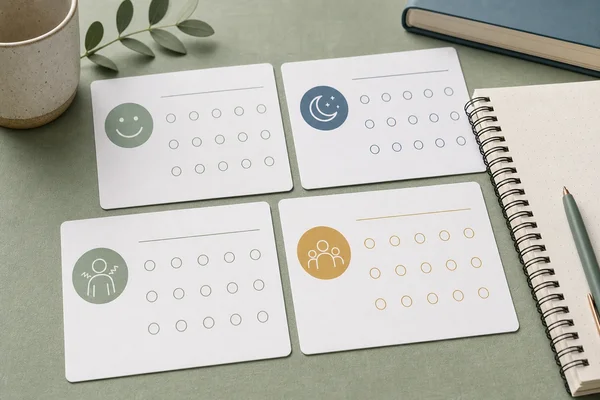
You do not need a perfect journal to learn from your patterns. A simple weekly check-in can be more sustainable than detailed daily tracking that becomes another source of pressure. The best system is one you can actually use when your energy is low.
Try tracking these items for a few weeks:
- Sleep: bedtime, wake time, sleep quality, naps, and nights with unusually little or excessive sleep.
- Stress load: conflicts, deadlines, losses, major changes, caregiving pressure, or emotional anniversaries.
- Body factors: illness, pain, menstrual cycle timing, medication side effects, appetite changes, or low energy.
- Substances: alcohol, cannabis, stimulants, caffeine, or other substances and the next-day mood effect.
- Routine anchors: meals, movement, daylight, social contact, therapy appointments, and prescribed medicine consistency.
- Mood and function: low mood, irritability, anxiety, concentration, motivation, self-care, and ability to handle tasks.
You can make the system even simpler by using three columns:
| Pattern to Notice | What to Write Down | Why It Helps |
|---|---|---|
| Before the shift | What changed in the last 1-3 weeks? | Shows possible bipolar depressive episode triggers |
| During the shift | What symptoms are affecting daily life? | Helps separate mood, sleep, energy, and function |
| What helped | What reduced pressure even slightly? | Builds a practical plan for future episodes |
The point is not to prove a trigger with certainty. It is to identify repeated warning signs. If the same pattern shows up three times, it is worth discussing.
What to Do When a Depressive Shift Starts
When you notice a depressive shift, the first goal is usually to reduce avoidable strain. Depression can make every task feel larger, so think in small stabilizing moves rather than a complete life overhaul.
Start with the basics you can influence today. Keep a consistent wake time if possible. Eat something simple. Step outside for light or fresh air. Reduce optional commitments. Avoid making major decisions while your mood is strongly shifted. If you use alcohol or other substances to cope, consider whether they tend to worsen the next day and whether support would help you reduce risk.
Next, lower the friction around care. If you already have a therapist, psychiatrist, primary care clinician, or support plan, use it earlier rather than waiting until things feel unmanageable. If you take prescribed medicine, follow the plan you were given and contact the prescriber if side effects, missed doses, or mood changes concern you.
Support from another person can make early action more realistic. You might send a brief message such as, "I think my mood is dropping. Can you check in with me tomorrow?" If you have thoughts of self-harm, feel unable to stay safe, or might act impulsively, seek urgent help through local emergency services, a crisis line, or the nearest emergency department.

Use Trigger Awareness as a Safer Starting Point
Bipolar depression triggers are not a personal failure, and tracking them is not about controlling every variable in life. It is about giving yourself more notice, more language, and more choices. Your pattern may involve stress, sleep, illness, hormones, substances, seasonality, reduced activity, or a combination that only becomes clear over time.
If you are reflecting on repeated mood lows, unusual highs, or the possibility that depressive episodes are part of a wider mood pattern, a structured bipolar disorder screening starting point can help you organize what you have noticed. Use it as an educational tool, not as a replacement for care. A qualified mental health professional can review your history, symptoms, safety needs, and treatment options with much more context.
FAQ
Does bipolar depression have a trigger?
It can. Many people notice that depressive episodes follow stress, poor sleep, fatigue, illness, hormonal shifts, substance use, seasonal changes, or routine disruption. Other episodes may appear without a clear trigger. Both patterns are possible.
What triggers depression in bipolar patients?
Common triggers include stressful life events, ongoing stress, sleep disruption, physical illness or injury, reduced activity, substance use, and medication changes. The exact pattern is personal, so tracking repeated changes before episodes can be more useful than looking for one universal trigger.
What triggers a depressive episode in bipolar II?
In bipolar II, a depressive episode may follow stress, sleep loss, overextension, reduced routine, or a period of hypomanic energy that felt productive at the time. Looking back at sleep, commitments, spending, social activity, and energy changes can help reveal a pattern.
Can bipolar depressive episodes be triggered by good events?
Yes. Good events can still disrupt sleep, routine, stimulation level, and stress load. Travel, celebrations, a new relationship, a major project, or a promotion may be positive but demanding. For some people, that disruption can contribute to later mood instability.
How to beat bipolar depression?
A safer goal is to manage bipolar depression with support rather than trying to defeat it through willpower. Helpful steps may include professional care, a crisis plan, steady sleep and routine, medication follow-through when prescribed, therapy skills, social support, and early action when warning signs appear.
How is bipolar disorder controlled over time?
Bipolar disorder is usually managed through an ongoing plan that may include medication, psychotherapy, sleep and routine stability, trigger awareness, reduced substance-related risk, and support from trusted people. The right plan is personal and should be guided by qualified professionals.