Bipolar Disorder Medication: A Comprehensive Guide to Types, Side Effects, and Safety
Navigating the world of mental health treatments can feel overwhelming. If you or a loved one are facing a potential diagnosis, you likely have many questions about bipolar disorder medication. You might wonder which drugs are safe, how they affect your personality, or if you will need them forever. These concerns are valid and very common.
Finding the right treatment path is rarely a straight line. Instead, it is a journey of understanding your unique biological needs. This guide aims to demystify the complex landscape of bipolar disorder medication. We will explore the different types of drugs, manage expectations about side effects, and discuss how to prepare for conversations with your healthcare provider.
However, medication is just one piece of the puzzle. Understanding your own symptom patterns is equally important. If you are still in the early stages of figuring out your mood swings, taking an educational bipolar disorder test can provide a helpful baseline to discuss with a professional.
The Main Categories of Bipolar Disorder Medication
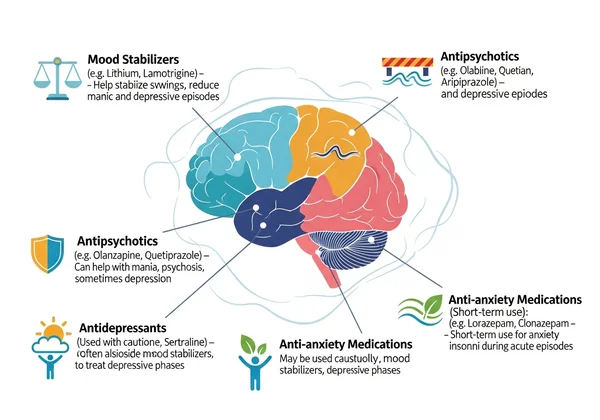
Treating bipolar disorder is not a "one-size-fits-all" process. Doctors use a variety of tools to stabilize mood swings. Generally, these medications fall into a few primary categories. A comprehensive bipolar disorder medication list usually includes mood stabilizers, antipsychotics, and sometimes antidepressants.
Understanding these categories helps you advocate for your own health. Here is a breakdown of the most common pharmaceutical tools used in treatment.
Mood Stabilizers: The Foundation
Mood stabilizers are often the first line of defense. Their primary goal is to prevent the extreme highs (mania) and lows (depression) characteristic of the condition.
- Lithium: This is the oldest and most well-known bipolar disorder medication. It is particularly effective at reducing the risk of suicide and preventing manic episodes.
- Anticonvulsants: Originally designed to treat epilepsy, drugs like Valproate (Depakote) and Lamotrigine (Lamictal) are widely used. Lamotrigine is frequently prescribed for maintenance treatment, especially to prevent depressive episodes.
Antipsychotics: Managing Acute Episodes and Maintenance
Antipsychotics are not just for hallucinations. In the context of bipolar disorder, "atypical" antipsychotics are powerful tools for stabilizing acute mania quickly.
Medications such as Quetiapine (Seroquel), Olanzapine (Zyprexa), and Aripiprazole (Abilify) are common choices. They are often used in combination with mood stabilizers. For many people, these drugs help clear the "noise" of racing thoughts, allowing for better sleep and clearer thinking.
Antidepressants: Understanding the Risks of Mania
The use of antidepressants in bipolar disorder is a nuanced topic. While they can help with depressive lows, they carry a risk. For some individuals, taking an antidepressant without a mood stabilizer can trigger a manic episode or rapid cycling.
Therefore, doctors exercise caution here. If you are prescribed an antidepressant, it is usually paired with a mood stabilizer to keep your "ceiling" safe while lifting the "floor" of your mood.
Treating Comorbidities: Managing Bipolar alongside Anxiety or ADHD
It is common to have other conditions alongside bipolar disorder. Anxiety and ADHD are frequent companions.
- Anxiety: Your doctor might prescribe short-term anti-anxiety medication, but often, stabilizing the bipolar mood swings resolves much of the anxiety.
- ADHD: Treating ADHD with stimulants can be tricky, as stimulants can trigger mania. Usually, the bipolar symptoms must be stabilized first before addressing ADHD focus issues.
Understanding Side Effects and Safety Realities
Fear of side effects is the number one reason people stop taking their medication. This fear is understandable. However, knowledge is power. When you know what to expect, you can manage side effects of bipolar medication proactively rather than reacting with panic.
Open communication with your doctor is essential. Most side effects are manageable, and some fade as your body adjusts.
Physical Side Effects: Managing Weight Gain and Lethargy
Some medications, particularly certain antipsychotics and mood stabilizers, can cause metabolic changes.
- Weight Gain: This is a major concern for many. It happens due to increased appetite or metabolic slowing.
- Lethargy: You might feel "sedated" or sleepy, especially in the first few weeks.
- Tremors: Mild hand shaking is a known side effect of Lithium.
Actionable Tips for Management:
- Hydration: Drink plenty of water, especially if taking Lithium.
- Monitor Diet: Be mindful of caloric intake if your appetite increases.
- Timing: Ask your doctor if you can take sedating medications at night to aid sleep.
Long-Term Health Considerations: Thyroid and Kidney Health
Some bipolar disorder medication, specifically Lithium, requires long-term monitoring. It can affect thyroid and kidney function over many years.
This does not mean damage is inevitable. It simply means you will need regular blood tests. These tests ensure the drug remains at a therapeutic level—high enough to work, but low enough to be safe. Viewing these blood tests as a safety net rather than a burden can change your perspective on treatment.
Pregnancy and Medication: Balancing Safety for Mother and Baby
If you are planning to become pregnant, consultation is vital. Some drugs, like Valproate, carry risks for the developing baby. However, stopping medication abruptly carries a high risk of relapse for the mother.
Many women successfully manage bipolar disorder during pregnancy. It requires a carefully planned medication strategy that balances maternal mental health with fetal safety.

The "Trial and Error" Process: Finding Your Right Mix
One of the most frustrating aspects of bipolar disorder medication is the trial period. You might expect immediate relief, but psychiatry is an art as well as a science.
Why Medication Responses Vary by Individual
Your unique genetic makeup, metabolism, and lifestyle all influence how a drug works. What works explicitly well for one person might do nothing for another—or cause unbearable side effects.
There is no single "best" pill. There is only the best pill for you.
Patience is Key: Navigating the Adjustment Period
Finding the right "cocktail" takes time. This phase is often called "titration."
- Start Low: Doctors usually start with a low dose to minimize shock to the system.
- Go Slow: Dosage is increased gradually.
- Observe: You monitor how you feel.
- Adjust: If side effects occur or symptoms persist, the plan changes.
During this time, feeling discouraged is normal. However, staying the course is often worth it.
Before You Visit the Doctor: Understanding Your Symptom Patterns
Before a doctor can prescribe the right bipolar disorder medication, they need a clear picture of what is happening. A 15-minute appointment is rarely enough time to explain months of mood fluctuations.
Doctors rely heavily on your self-reporting. If you cannot describe your highs and lows accurately, you might receive a treatment plan that doesn't fit your needs (for example, treating depression when the real issue is bipolar II).
Why Accurate Symptom Tracking Leads to Better Treatment Plans
Memory is often unreliable. When you are depressed, it is hard to remember what mania felt like. When you are manic, you might not feel like anything is wrong at all.
Keeping a record helps bridge this gap. It provides data rather than just feelings.
Pre-Appointment Checklist: Questions to Ask Yourself
Before you walk into the psychiatrist's office, try to answer these questions:
- Have I had periods of high energy where I needed less sleep?
- Do my mood shifts happen rapidly, or do they last for weeks?
- Have family members noticed changes in my behavior?
- Have I engaged in risky behaviors (spending, speeding) that are out of character?
Gain Clarity with an Educational Screening Tool
If you are struggling to answer the questions above, or if you feel confused about your symptoms, using a structured tool can help organize your thoughts.
Our BipolarDisorderTest.org platform offers a free, confidential screening test. It is not a medical diagnosis, but an educational tool designed to highlight potential symptom patterns.
Taking this bipolar disorder test generates a personalized report. You can print this report and take it to your doctor. It serves as an excellent conversation starter, helping you articulate your experiences clearly and confidently.
Start Your Educational Screening Test Here
Living Well: Diet, Lifestyle, and Interactions
Medication is a pillar of treatment, but it is not the entire building. To truly thrive, you must support your bipolar disorder medication with lifestyle choices.
Dietary Considerations: Caffeine, Alcohol, and Supplements
What you put in your body interacts with your medication.
- Alcohol: It is a depressant and can destabilize mood. It also interferes with how the liver processes many medications.
- Caffeine: High intake can trigger anxiety or hypomania and disrupt sleep.
- Grapefruit: Surprisingly, grapefruit juice affects the metabolism of certain psychotropic drugs.
- Salt: If taking Lithium, consistent salt intake is key. Sudden changes in salt consumption can alter Lithium levels in your blood.
The Role of Psychotherapy (CBT/DBT) in Support of Medication
Pills treat biology; therapy treats psychology. Cognitive Behavioral Therapy (CBT) helps you recognize negative thought patterns. Dialectical Behavior Therapy (DBT) is excellent for emotion regulation and distress tolerance.
Using medications for bipolar disorder creates the stability you need to do the work in therapy. They are partners, not competitors.
Sleep and Routine: The "Non-Medical" Stabilizers
A disrupted circadian rhythm is a major trigger for episodes.
-
Strict Sleep Schedule: Go to bed and wake up at the same time, even on weekends.
-
Routine: Eating and working at predictable times signals safety to your brain.

Taking the Next Step in Your Health Journey
Starting bipolar disorder medication is a significant step toward reclaiming your life. It requires courage to accept help and patience to find the right balance. Remember, a diagnosis is not a label that limits you; it is a map that guides you toward stability.
You don't have to figure this out alone. Whether you are ready to see a doctor or just starting to question your symptoms, knowledge is your best ally. If you haven't yet, consider exploring our bipolar disorder signs and symptoms guide to deepen your understanding before taking action.
Frequently Asked Questions About Bipolar Treatment
Is there a single "best" medication for bipolar disorder?
No. While Lithium is often considered a "gold standard," the best medication depends on your specific symptoms, biology, and tolerance for side effects.
How long does it take for medication to start working?
Generally, it takes 2 to 6 weeks to feel the full therapeutic effect. However, you might notice improvements in sleep or anxiety sooner.
What should I do if I miss a dose?
Do not double up the next dose. Take it as soon as you remember, unless it is close to your next scheduled dose. Always consult your doctor or pharmacist for a specific plan regarding your specific medication.
Can I stop taking medication if I feel better?
Stopping abruptly is risky and often leads to a relapse. Feeling better means the medication is working, not that the condition is gone