Bipolar Disorder Test: Mood Tracker Journaling for Self-Monitoring
Living with bipolar disorder's emotional ups and downs can be challenging, but you have support and tools to help you navigate. One moment, you might feel on top of the world, and the next, you're in a deep valley. If you've ever wondered about these patterns, you may have considered taking an online screening. After getting a baseline understanding from a bipolar disorder test, what comes next? A mood tracking journal can become your most powerful companion.
This simple practice helps you recognize your unique emotional patterns, provides clear information to share with healthcare professionals, and empowers you to feel more in control of your well-being. This guide walks you through creating and maintaining a mood tracker that helps you better understand your emotional patterns.

Why Mood Tracking Matters After Your Bipolar Disorder Test
Taking a screening test is an excellent first step toward understanding your mental health. It provides a snapshot of your symptoms at a specific point in time. However, mood tracking offers a continuous story, revealing the nuances that a single test cannot capture. It turns that snapshot into a detailed film of your emotional life.
Connecting Your Test Results to Daily Patterns
Your test results can highlight potential signs of bipolar disorder, but daily journaling brings those signs to life. For example, a screening might indicate a history of elevated moods and depressive episodes. Your mood journal can show you exactly how these episodes unfold.
You might notice that periods of high energy and little need for sleep (hypomania or mania) are often followed by days of deep sadness and fatigue (depression). Documenting these shifts creates a personal record. This record validates your experiences and shows the connection between your test results and daily life.
How Self-Monitoring Complements Professional Diagnosis
A mood tracker is not a replacement for a professional diagnosis, but it is an invaluable tool to support it. When you visit a healthcare provider, sharing a detailed log of your moods, sleep patterns, and life events can be extremely helpful.
Instead of trying to recall how you felt weeks or months ago, you can present clear, organized data. This information helps clinicians make more accurate assessments. It allows them to distinguish bipolar disorder from other conditions like depression or ADHD. They can then create a treatment plan specifically tailored to your needs. It transforms your appointment from a memory test into a productive, data-driven conversation about your health.
Building Your Bipolar Mood Tracker: Essential Elements
A successful mood journal doesn't have to be complicated. The goal is to capture key information consistently. By focusing on a few essential elements, you can create a tracker that is both easy to maintain and highly effective.
Mood Intensity Scale: Translating Feelings into Data
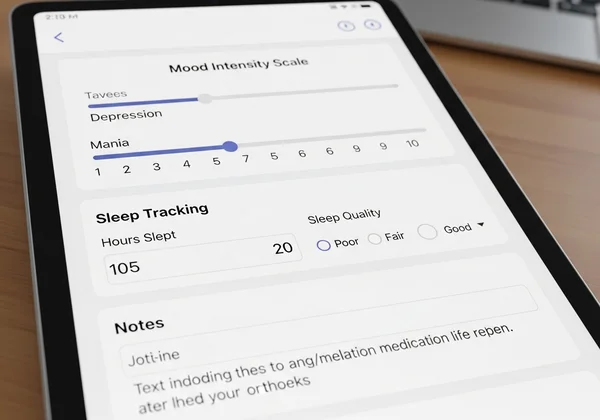
Feelings can be hard to describe, so a simple scale can help you quantify them. Most people use a 1-to-10 scale. For example:
- Depression: 1 (mildly down) to 10 (severely depressed, unable to function).
- Mania/Hypomania: 1 (slightly more energetic/irritable) to 10 (extremely high energy, engaging in risky behavior).
- Anxiety: 1 (mildly worried) to 10 (overwhelming panic).
Rating your mood daily helps you spot subtle shifts and identify when an episode might be starting. It turns abstract emotions into concrete data points that reveal your patterns over time.
Sleep Tracking Patterns: The Hidden Key to Stability
Sleep is one of the most critical factors in managing bipolar disorder. Changes in sleep patterns are often the first sign of an impending mood episode. A manic episode may begin with a decreased need for sleep, while a depressive episode often involves sleeping too much or struggling with insomnia.
Your sleep journal should include:
- The time you went to bed.
- The time you woke up.
- The total hours you slept.
- The quality of your sleep (e.g., restful, restless, woke up frequently).
Tracking this information helps you and your doctor understand the powerful connection between your sleep and your mood stability.
Medication & Life Event Log: Understanding Triggers
Your moods don't exist in a vacuum. They are often influenced by medications, stress, and significant life events. Adding a small section to your daily entry can provide crucial context.
Note things like:
- Medication: Did you take it on time? Did you start a new medication or change a dose?
- Life Events: Did you have a stressful day at work? An argument with a loved one? Or a particularly joyful celebration?
This log helps you identify personal triggers for mood shifts. Understanding what causes your moods to change is a major step toward managing them effectively.
Daily Bipolar Mood Diary Templates You Can Start Today
Getting started is often the hardest part. The key is to find a method that you will stick with. Whether you prefer the classic feel of pen and paper or the convenience of a digital app, there is a solution for you. To begin your journey, you can always establish a baseline when you take our free bipolar disorder test.
Digital vs. Paper: Choosing Your Tracking Method
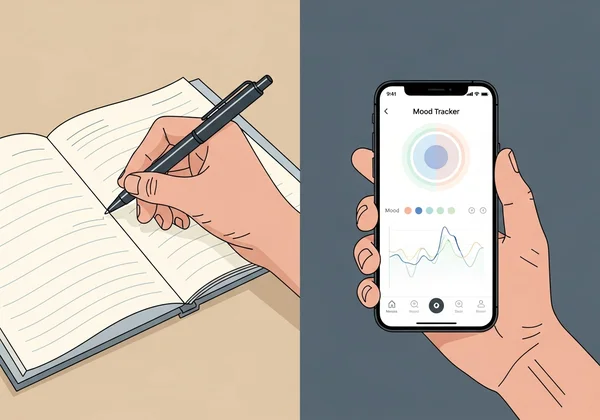
There is no "right" way to keep a mood journal. The best method is the one that fits seamlessly into your life.
- Digital Apps: Many apps are designed specifically for mood tracking (e.g., Daylio, eMoods). They offer convenience, reminders, and automatic charting, which makes it easy to visualize your patterns.
- Paper Journals: A simple notebook and pen can be just as powerful. Some people find the physical act of writing to be therapeutic. It offers flexibility—you can design your layout exactly how you want it.
Experiment with both to see what feels most natural. The goal is consistency, not perfection.
Sample Weekly Mood Tracker Template
Here is a simple table you can draw in a notebook or create in a spreadsheet. It covers the essential elements in a clear, easy-to-use format.
| Day | Mood (1-10 Depressed/Manic) | Hours Slept | Sleep Quality (Poor/Fair/Good) | Meds Taken? | Notes / Life Events |
|---|---|---|---|---|---|
| Mon | D: 3, M: 2 | 7.5 | Good | Yes | Productive work day. |
| Tue | D: 2, M: 4 | 6.0 | Fair | Yes | Felt very energetic. |
| Wed | D: 5, M: 2 | 8.0 | Poor | Yes | Argument with family. |
| Thu | D: 6, M: 1 | 9.5 | Good | Yes | Felt very low energy. |
| Fri | D: 4, M: 3 | 7.0 | Good | Yes | Looking forward to weekend. |
Sleep Journal Template: The Professional-Ready Format
When discussing sleep with a healthcare provider, having specific data is essential. This format is designed to be clear and professional.
Week of: [Date]
- Monday: Bed at 11:00 PM, Woke at 6:30 AM. Total Sleep: 7.5 hours. Quality: Good, felt rested.
- Tuesday: Bed at 1:00 AM, Woke at 7:00 AM. Total Sleep: 6 hours. Quality: Fair, mind was racing.
- Wednesday: Bed at 10:30 PM, Woke at 6:30 AM. Total Sleep: 8 hours. Quality: Poor, woke up multiple times.
This simple format gives your doctor a clear picture of your sleep stability at a glance.
Making Your Mood Tracking Work for You
Starting a journal is one thing; maintaining it is another. The real benefits of mood tracking come from consistent, long-term use. Here are some tips to help you stick with it and use your insights effectively.
Consistency Tips: When You Don't Feel Like Journaling
It's normal to have days where you lack the motivation to write, especially during a depressive episode. On those days, aim for the bare minimum.
- Set a Reminder: Use your phone to set a daily alarm at a time you're usually free, like before bed.
- Keep it Simple: On tough days, just fill in the numbers (mood rating, hours slept). You can skip the detailed notes.
- Don't Strive for Perfection: If you miss a day, don't worry about it. Just pick it back up the next day. The goal is progress, not a perfect record.
Sharing Your Insights with Healthcare Providers
Your mood journal is a powerful communication tool. Before your appointment, review your journal and summarize any key patterns you've noticed.
- Bring Your Journal: Whether it's a notebook or your phone, have your data ready to show your doctor.
- Highlight Key Periods: Point out weeks where you experienced significant mood shifts, sleep disruptions, or major life events.
- Ask Questions: Use your data to ask specific questions, such as, "I noticed my mood dropped after I started this new medication. Could there be a connection?"
This proactive approach makes you an active partner in your own healthcare journey.
Your Journey to Better Understanding Begins Today
Mood tracking is a practical, empowering step you can take to understand your emotional landscape and advocate for your health. It transforms confusion into clarity and provides a solid foundation for conversations with professionals.
If you're just beginning to explore your mood patterns, a great place to start is with a confidential screening. Our confidential online bipolar disorder test can provide you with a valuable baseline. From there, you can use the templates and tips in this guide to build a deeper understanding of your unique journey. Start your journey to better self-understanding today with our simple tools.
Frequently Asked Questions About Mood Tracking for Bipolar Disorder
How often should I update my bipolar mood tracker for the most accurate insights?
For the best results, try to update your mood tracker once a day. A good time is in the evening, as it allows you to reflect on the entire day. If you are experiencing rapid mood shifts, you might find it helpful to check in twice—once in the morning and once at night.
Can mood tracking really help predict manic or depressive episodes?
Yes, for many people it can. Consistent tracking helps you identify your personal early warning signs. For example, you might learn that sleeping two hours less than usual for a few nights in a row is a strong predictor of a hypomanic episode. Recognizing these signs allows you to take proactive steps, like contacting your doctor.
What are the most important symptoms to track in a bipolar mood journal?
The most critical symptoms to track are mood (both depression and mania/hypomania), sleep duration and quality, and energy levels. It's also very helpful to note anxiety, irritability, and any medication you've taken. Adding notes about life events provides important context.
How do I know if my mood tracking patterns are concerning enough to discuss with my doctor?
You should discuss any significant patterns with your doctor. This includes dramatic shifts in mood that last for several days, major changes in your sleep patterns (either much more or much less), or if your mood swings are negatively impacting your work, relationships, or daily functioning. If you're unsure, it's always best to share your journal and ask.
Is there a connection between my bipolar test results and what I should track in my journal?
Absolutely. Your results from an initial bipolar screening questionnaire can give you a starting point. If the results suggest potential symptoms of bipolar disorder, your journal becomes the tool to monitor those specific symptoms in your daily life. It helps confirm, clarify, and add detail to the initial findings, creating a comprehensive picture for your mental health.