Brain With Bipolar Disorder and What Brain Scans Can Show
If you have searched for what happens in the brain with bipolar disorder, you may be trying to make sense of mood shifts that feel intense, confusing, or hard to explain. The short answer is that bipolar disorder is linked with differences in brain circuits, chemistry, and stress-response systems, but those differences do not make a brain "broken." They also do not give a simple scan-based answer about one person's experience. If you are noticing repeated mood highs, lows, sleep changes, or impulsive periods, a private mood-pattern screening can be a gentle first step for reflection before a professional conversation.
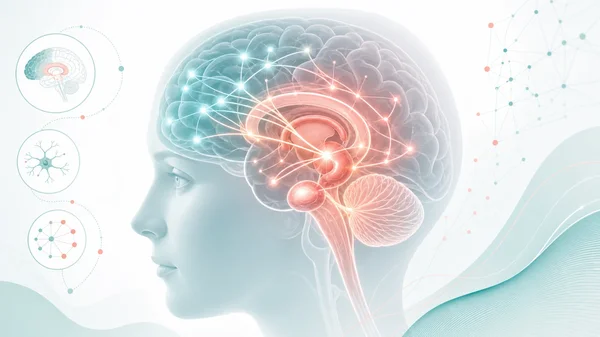
What Happens in the Brain With Bipolar Disorder?
Bipolar disorder is a mental health condition with a real biological side. It involves mood episodes that can affect energy, sleep, attention, judgment, and activity level. Researchers study it as a condition of brain networks, not as a flaw in character or willpower.
In broad terms, a brain with bipolar disorder may show differences in three connected areas:
- Structure, such as subtle differences in gray matter volume or cortical thickness in some studies.
- Function, meaning how strongly or efficiently certain brain networks activate during emotion, reward, memory, and decision-making tasks.
- Chemistry, involving neurotransmitters and other signaling systems that help regulate mood, motivation, sleep, and stress.
These findings are group-level patterns. They come from comparing many people with bipolar disorder to many people without it. They do not mean every person has the same brain changes, and they do not mean a scan can explain every symptom.
Bipolar Brain vs Normal Brain in Plain English
The phrase "bipolar brain vs normal brain" is common, but it can be misleading. A better comparison is "brain patterns often seen in bipolar disorder vs patterns more often seen in people without the condition."
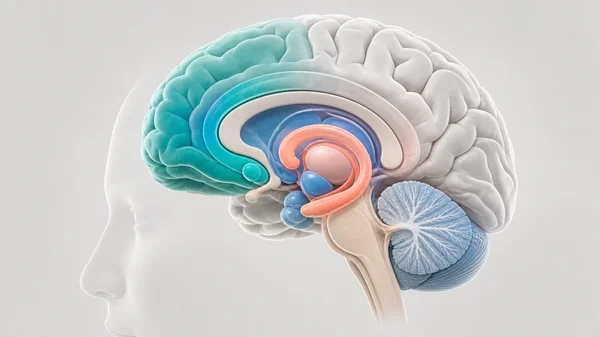
Many studies point to differences in regions involved in mood regulation, self-control, reward sensitivity, memory, and emotional learning. These include the prefrontal cortex, hippocampus, amygdala, and connected limbic circuits. The prefrontal cortex helps with planning, inhibition, attention, and perspective. The limbic system helps process threat, reward, emotional salience, and memory. When these systems do not coordinate smoothly, a person may have more trouble regulating energy, sleep, impulses, and emotional intensity during an episode.
Still, the difference is not like looking at a healthy bone beside a broken bone. Brain findings in bipolar disorder are subtle, varied, and influenced by age, medication history, number of mood episodes, stress, sleep, substance use, other conditions, and genetics.
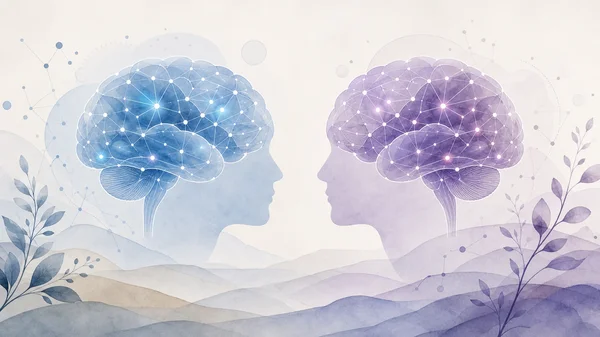
What Part of the Brain Is Associated With Bipolar Disorder?
No single "bipolar spot" exists in the brain. Research usually points to networks. Several areas are especially relevant because they help coordinate emotion, thought, and behavior.
The prefrontal cortex supports planning, impulse control, attention, and flexible thinking. During mania or hypomania, changes in control networks may relate to racing thoughts, reduced caution, or unusually high goal-directed activity. During depression, the same broad system may be involved in slowed thinking, poor concentration, and difficulty shifting away from negative thoughts.
The amygdala helps the brain detect emotional importance. If emotional signals feel unusually intense, the prefrontal cortex may have to work harder to keep reactions proportionate.
The hippocampus is involved in memory and stress regulation. Some imaging studies have found smaller hippocampal volume in groups of people with bipolar disorder, although results vary. This matters because memory, stress, and mood are closely linked.
Gray matter includes many nerve cell bodies and supports information processing. Studies have reported gray matter differences in mood-regulation regions, but the pattern is not consistent enough to use as a personal marker.
If you are trying to connect these brain-based explanations with your own mood history, an educational bipolar screening tool can help you organize observations without turning them into a medical label.
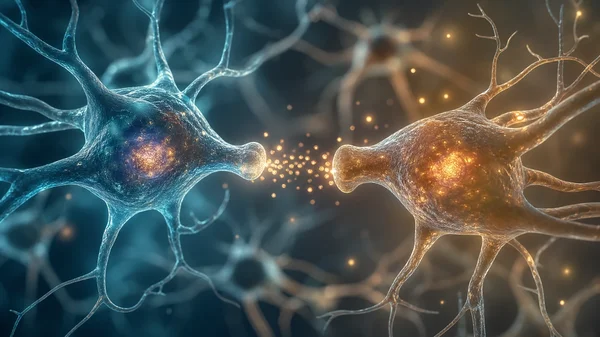
Bipolar Brain Chemistry and Mood Episodes
Bipolar brain chemistry is often explained through neurotransmitters, the chemical messengers that help nerve cells communicate. You may see dopamine, serotonin, and norepinephrine mentioned most often. That is useful, but it is also an oversimplification.
Dopamine is involved in reward, motivation, movement, and goal pursuit. When reward and motivation circuits become highly activated, a person may feel unusually energized, confident, driven, or restless. Serotonin is involved in mood, sleep, appetite, and emotional balance. Norepinephrine helps regulate alertness, stress response, and energy.
Mood episodes are not caused by one chemical being simply "too high" or "too low." The brain works through circuits, timing, receptor sensitivity, hormones, inflammation, sleep-wake rhythms, and learned stress responses. That is why two people with bipolar disorder can have different symptoms and still share the same broad condition.
This also explains why sleep is so important. Sleep loss can affect reward circuits, emotional regulation, and stress hormones. For some people with bipolar disorder, disrupted sleep is not just a side effect of a mood episode; it can be part of the pattern that makes episodes more likely or more intense.
Are Brain Changes the Same as Bipolar Brain Damage?
Searches such as "bipolar brain damage symptoms" and "reversing bipolar brain damage" are understandable, but the wording can create unnecessary fear. Research does suggest that bipolar disorder is associated with structural and functional brain differences. Some studies also connect more frequent manic or hypomanic episodes with greater changes in certain cortical areas over time.
That does not mean every person with bipolar disorder has ongoing brain damage. It also does not mean the future is fixed. The safer interpretation is this: repeated severe mood episodes, sleep disruption, stress, and untreated symptoms may place strain on brain systems involved in mood and cognition, while steady care and relapse prevention may support better long-term functioning.
Possible cognitive or functional issues can include trouble concentrating, slower processing speed, memory complaints, impulsive decisions, or difficulty recovering routines after an episode. These can happen for many reasons, including mood state, sleep debt, medication effects, anxiety, trauma, substance use, or another medical issue. They deserve attention, but they should not be self-labeled as brain damage.
Is Bipolar Brain Damage Reversible?
"Reversible" is a tricky word because brain research does not point to one single change that appears and then disappears in the same way for everyone. Some brain and cognitive changes may improve when mood episodes are well managed, sleep becomes more stable, substance use is addressed, and stress is reduced. Other differences may be long-standing vulnerabilities rather than changes caused by the condition.
The hopeful part is that the brain is adaptive. Neuroplasticity means the brain can change with learning, routines, therapy skills, sleep consistency, social rhythm, and medical care. Improvement does not require pretending bipolar disorder is simple. It means focusing on the factors that are most likely to support stability.
Helpful questions to bring to a professional include:
- Are my concentration or memory problems tied to mood episodes, sleep, medication, anxiety, or something else?
- Do my highs include reduced need for sleep, impulsive choices, or unusually fast thoughts?
- What warning signs show up before my mood shifts become disruptive?
- What daily rhythms seem to protect my mood?
What Does a Brain Scan of Someone With Bipolar Disorder Show?
A brain scan of someone with bipolar disorder may show patterns that are interesting to researchers, but routine brain scans are not used to identify bipolar disorder in an individual person. MRI studies can measure gray matter, cortical thickness, hippocampal volume, or activity during tasks. Functional MRI can look at how networks respond during emotion or cognitive challenges.
These tools are powerful for research because they can compare groups and reveal patterns. They are not precise enough to say, "This scan proves bipolar disorder" or "This scan rules it out." Many findings overlap with depression, anxiety, trauma-related conditions, ADHD, substance use, and ordinary human variation.
For an individual, clinicians rely on a careful history: mood episodes, duration, sleep changes, energy, behavior, family history, medication response, substance use, safety concerns, and how symptoms affect life. Brain scans may be used when a clinician wants to rule out another neurological or medical issue, but that is different from using a scan as a bipolar-specific answer.
Is Bipolar Disorder Neurological or Psychological?
Bipolar disorder sits at the intersection of biology, psychology, and life context. It is usually classified as a psychiatric condition, but that does not make it "only psychological." Mood, thought, sleep, energy, reward, stress, and behavior all depend on brain systems.
At the same time, biology is not the whole story. Stress, trauma history, relationship strain, sleep schedules, substance use, routines, and coping skills can influence when symptoms appear and how disruptive they become. A complete view includes the brain, the mind, the body, and the person's environment.
This balanced view can reduce shame. If symptoms have a brain basis, they are not a personal weakness. If routines and skills matter, the person is not powerless. Both ideas can be true at the same time.

How to Support Brain Health When Bipolar Disorder Is a Possibility
Learning about the brain with bipolar disorder is useful only if it helps you take calmer, safer next steps. The goal is not to inspect yourself for damage. The goal is to notice patterns early, protect sleep, reduce episode risk, and bring clearer information to a qualified professional.
Consider these practical steps:
- Track mood and sleep together. Mood ratings are more useful when paired with bedtime, wake time, energy, and major stressors.
- Watch for episode patterns. Reduced need for sleep, unusually high confidence, racing thoughts, increased spending, agitation, or risky choices may be important to record.
- Protect daily rhythm. Consistent sleep, meals, movement, light exposure, and social routines can support mood regulation.
- Be careful with substances. Alcohol, cannabis, stimulants, and recreational drugs can complicate mood patterns and sleep.
- Prepare for professional care. Bring notes about timing, duration, family history, medication reactions, and functional changes.
If you want a low-pressure way to organize your observations, a structured self-reflection resource can help you think through mood patterns before discussing them with a mental health professional. Screening information is not a substitute for care, but it can make the first conversation more focused.
FAQ
Does the brain look different with bipolar disorder?
In research studies, groups of people with bipolar disorder may show differences in gray matter, cortical thickness, hippocampal volume, or activity in emotion and control networks. These patterns are not consistent enough to identify bipolar disorder from one person's scan.
What happens in the brain with bipolar disorder?
Bipolar disorder is associated with changes in mood-regulation circuits, reward processing, stress response, sleep-wake rhythms, and neurotransmitter signaling. These changes can affect energy, sleep, attention, emotion, and decision-making during mood episodes.
What part of the brain is most associated with bipolar disorder?
The prefrontal cortex, amygdala, hippocampus, and broader limbic networks are often discussed. The condition is better understood as a network-level pattern rather than a problem in one isolated brain area.
Is bipolar disorder neurological or psychological?
It is a psychiatric condition with biological brain involvement and psychological, social, and environmental influences. Brain systems matter, and so do sleep, stress, routines, relationships, coping skills, and professional support.
Is bipolar brain damage reversible?
Some cognitive and functional difficulties may improve when mood episodes, sleep, stress, and co-occurring issues are better managed. But "brain damage" is often too blunt a phrase. Individual recovery and brain changes vary, so it is better to focus on stability and professional guidance.
Can you live a good life with bipolar disorder?
Yes, many people with bipolar disorder build meaningful, stable, and fulfilling lives with the right support plan. That often includes professional care, sleep protection, early warning sign tracking, supportive relationships, and practical routines.
How long can a manic episode last?
A manic episode is generally measured in days or longer, not minutes or hours, and it can persist for a week or more. Severe symptoms or safety concerns need urgent professional attention.
How can you manage bipolar naturally?
Lifestyle habits can support stability, especially consistent sleep, regular routines, exercise, stress reduction, and avoiding mood-disrupting substances. Natural strategies should be viewed as support, not a replacement for professional mental health care.