How Long Does Bipolar Disorder Last? Episode Timelines and Long-Term Outlook
If you are searching "how long does bipolar disorder last," you may be asking two different questions at once: how long an individual episode can last, and whether the condition itself ever fully goes away. The short answer is that bipolar disorder is usually a long-term mood condition, while manic, hypomanic, depressive, mixed, or psychosis-related symptoms happen in episodes that can vary widely from person to person. Understanding that difference can make the topic feel less mysterious and more manageable. If you are tracking mood changes and want a structured place to reflect, an educational bipolar disorder screening tool can help you organize observations before speaking with a qualified professional.

Bipolar Disorder Is Usually Long Term, but Episodes Come and Go
Bipolar disorder is best understood as a condition involving shifts between mood states rather than one continuous feeling. A person may have periods of depression, periods of unusually elevated or energized mood, mixed features, and long stretches when symptoms are much quieter. Some people have frequent changes. Others have only occasional episodes separated by months or years.
That is why the phrase "last" needs context. The underlying vulnerability to mood episodes often remains long term, but the visible episode is time-limited. With ongoing care, many people work, study, build relationships, parent, create routines, and live meaningful lives. The goal is not to prove that every day will feel the same. The goal is to recognize patterns early, reduce episode severity, and build a support plan that fits real life.
It is also important to avoid self-labeling from timing alone. A week of high energy, a month of low mood, or a sudden change after stress can have many explanations. Timing can be useful information, but it needs to be interpreted alongside symptoms, impairment, medical history, substances, sleep changes, and professional evaluation.
How Long Does Mania Last in Bipolar Disorder?
A manic episode is usually discussed in terms of days to weeks, but untreated mania can last longer. Clinically, mania is associated with a distinct period of elevated, expansive, or irritable mood plus increased energy and activity. It may include reduced need for sleep, racing thoughts, impulsive choices, inflated confidence, agitation, or risky behavior. Severe mania can also involve psychosis or a need for urgent support.
Many educational medical sources describe mania as lasting at least one week, or any duration when hospitalization is needed. In real life, the course can be shorter, longer, or interrupted by treatment, sleep restoration, medication changes, substance use, or stress. Some people notice warning signs first: sleeping less without feeling tired, talking faster, taking on too many plans, spending more, driving more aggressively, or feeling unusually unstoppable.
If you are wondering how long a manic episode lasts if untreated, the safest answer is that it can continue for weeks or even longer and can become more disruptive over time. That does not mean every episode follows the same path. It does mean that possible mania is worth taking seriously, especially when sleep drops sharply, judgment changes, or safety concerns appear.

How Long Does Bipolar Depression Last?
Bipolar depression often lasts longer than elevated mood episodes and is one reason bipolar disorder can be so confusing. A person may spend far more time feeling low, slowed down, tired, foggy, or disconnected than feeling obviously energized. Depressive episodes may last weeks or months, and patterns differ across bipolar I, bipolar II, cyclothymic presentations, and individual history.
Common features can include low mood, loss of interest, changes in sleep or appetite, low energy, guilt, trouble concentrating, and thoughts that life feels too heavy. These symptoms overlap with major depression, which is one reason a history of elevated mood, hypomania, family history, antidepressant reactions, and episode pattern can matter.
If the question is "bipolar disorder how long does depression last," the most honest answer is that there is no single clock. Duration depends on the person's pattern, co-occurring stressors, sleep, medical factors, substance use, treatment access, and support. A symptom journal can help because memory often blurs during long low periods. Tracking sleep, energy, mood, irritability, impulsivity, and major life events can make a future conversation with a clinician more concrete.
How Long Does Psychosis Last in Bipolar Disorder?
Psychosis can occur during severe manic or depressive episodes for some people. It may involve hallucinations, delusional beliefs, paranoia, or a loss of contact with shared reality. When psychosis appears with bipolar disorder, its duration is usually tied to the mood episode, but the timeline can vary. It may improve as the episode is treated and stabilizes, yet it should never be minimized or treated as a simple mood swing.
Seek urgent support if someone is hearing voices, feels watched or controlled, believes they have special powers in a way that changes behavior, cannot sleep for a prolonged period, becomes disorganized, or may harm themselves or others. In the United States, calling or texting 988 can connect someone with crisis support, and emergency services may be appropriate when immediate safety is at risk.
This is a place where timing is less important than safety and reality testing. Whether symptoms have lasted hours, days, or weeks, psychosis-like experiences deserve prompt professional attention.
What About Bipolar 2, Cyclothymia, and Postpartum Mood Episodes?
Bipolar II is often misunderstood because hypomania may feel productive, pleasant, or simply "like myself but faster" at first. Hypomania is generally shorter and less impairing than full mania, often described as lasting at least four days, but it still matters because it can alternate with depression. Many people with bipolar II seek help during depression and only later realize that periods of increased energy, confidence, or reduced sleep were part of the pattern.
Cyclothymia involves chronic mood fluctuation with many periods of hypomanic and depressive symptoms that do not fully meet the threshold for major episodes. The word chronic matters here: the pattern is measured over a long stretch of time, not a single bad week.
Postpartum bipolar symptoms can be especially time-sensitive because sleep disruption, hormonal shifts, stress, and prior mood history can interact. Some postpartum mood episodes emerge within days or weeks after birth, while depression or mood instability may last longer without support. Any postpartum psychosis-like symptoms, severe insomnia, extreme agitation, or thoughts of harm should be treated as urgent.
For readers trying to sort out whether their experience sounds closer to bipolar I, bipolar II, cyclothymia, or another mood concern, a private mood pattern self-reflection resource may help organize questions without replacing clinical care.
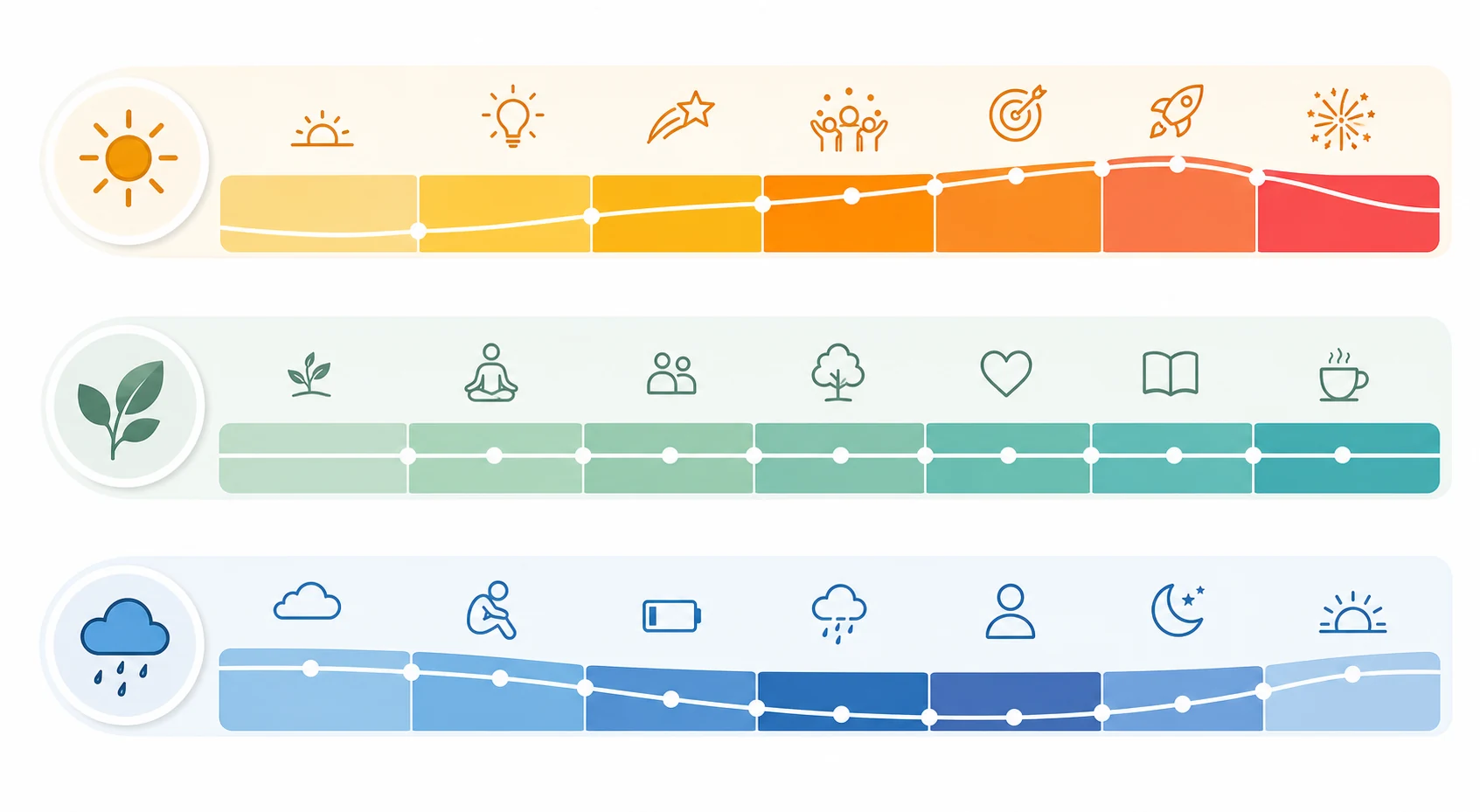
What Can Affect How Long an Episode Lasts?
No single factor controls episode length, but several patterns come up often:
- Sleep disruption can trigger or intensify elevated mood symptoms.
- Substance use can complicate mood changes and make patterns harder to read.
- High stress, grief, conflict, or major life transitions can affect timing.
- Stopping medication suddenly, when medication is part of a care plan, can raise risk for relapse.
- Co-occurring anxiety, ADHD, trauma, physical illness, or hormonal changes can blur the picture.
- Early support may shorten disruption and reduce harm for some people.
It can help to think in terms of "episode load" rather than days alone. A short episode with risky behavior, no sleep, or psychosis-like symptoms may be more serious than a longer period of mild symptoms. A month of depression that affects work, parenting, hygiene, or safety also deserves attention. Duration matters, but impairment and risk matter too.
A Practical Timeline Checklist to Bring to a Professional
If you are unsure what is happening, try building a simple timeline instead of relying on memory. You do not need perfect data. A few consistent notes are often more useful than a detailed journal that becomes impossible to maintain.
Track these items for each mood shift:
- Start date and approximate end date
- Sleep hours and whether you felt rested
- Energy level and activity changes
- Irritability, impulsivity, spending, sexuality, or risk-taking
- Depressive symptoms such as hopelessness, slowed thinking, or loss of interest
- Any psychosis-like experiences or safety concerns
- Alcohol, cannabis, stimulants, medication changes, or major stressors
- What helped, what worsened things, and who noticed changes
Bring the timeline to a licensed mental health professional or primary care clinician. You can say, "I am not sure what this means, but these are the patterns I have noticed." That kind of record can support a more focused conversation without forcing you to explain everything from scratch.
When Bipolar Symptoms Feel Confusing, Start With Patterns
So, how long does bipolar disorder last? The condition is commonly long term, but episodes have their own timelines. Mania may last days to weeks or longer, hypomania may be shorter and easier to miss, bipolar depression may last weeks to months, and psychosis-related symptoms require prompt attention whenever they appear. The most useful next step is usually not to guess the label alone. It is to notice patterns, protect sleep, reduce risk, and seek qualified support when symptoms affect safety, relationships, work, school, or daily functioning.
If you want a calm way to begin organizing what you have noticed, you can review an educational bipolar mood screening questionnaire. Use it as a reflection aid, not as a substitute for professional evaluation, and share any concerning patterns with a qualified clinician.

FAQ
Can someone with bipolar live a normal life?
Many people with bipolar disorder build stable, meaningful lives with the right mix of care, routines, support, and self-awareness. "Normal" may include learning personal triggers, protecting sleep, having a crisis plan, and checking in early when mood patterns shift. The path is individual, but bipolar disorder does not erase the possibility of work, relationships, creativity, parenting, or long-term goals.
Do bipolar people come back after a breakup?
Some do, and some do not. A breakup can interact with mood symptoms, but relationship choices also depend on personality, boundaries, safety, accountability, and circumstances. If you are trying to understand a partner's behavior, avoid reducing every action to bipolar disorder. Focus on respectful communication, clear boundaries, and support from trusted people or professionals when the situation feels intense.
How long does a manic episode last if untreated?
Untreated mania can last for weeks or longer and may become more risky as sleep loss, impulsivity, agitation, or psychosis-like symptoms increase. Because possible mania can affect judgment and safety, it is wise to seek professional guidance early rather than waiting to see how long it lasts.
How can someone feel better with bipolar disorder?
Helpful steps often include consistent sleep routines, reduced substance use, mood tracking, supportive relationships, stress management, and care from qualified professionals. Some people also use medication and therapy as part of a long-term plan. The best approach depends on the person, so professional guidance matters.
Is bipolar disorder hereditary?
Family history can increase risk, but heredity is not destiny. Bipolar disorder appears to involve a mix of genetic, biological, environmental, and life-stress factors. Having a relative with bipolar disorder does not mean you will definitely develop it, and having no family history does not rule it out.
Is bipolar disorder dangerous?
Bipolar disorder is not a character flaw, and people with bipolar disorder should not be stereotyped as dangerous. The real concern is that severe mood episodes can increase risk for harm, unsafe choices, relationship strain, substance use, or suicidal thoughts. Support, treatment, and early planning can reduce risk.
What are the 7 types of bipolar disorder?
People sometimes search for "7 types," but clinical discussions more commonly focus on bipolar I, bipolar II, cyclothymic disorder, substance or medication-induced bipolar-related disorder, bipolar disorder due to another medical condition, other specified bipolar-related disorder, and unspecified bipolar-related disorder. A professional evaluation is needed to sort out which category, if any, fits a person's full history.