Manic vs. Hypomanic Episodes: Understanding Key Signs Before a Bipolar Disorder Test
Are you experiencing intense emotional highs followed by crushing lows, but you’re not sure what these mood shifts mean? Understanding your experiences is the first step toward clarity and well-being. Many people feel confused by their energy levels and emotions, especially when trying to figure out if their patterns might align with bipolar disorder.
This guide explores the crucial differences between manic and hypomanic episodes. These are key indicators of bipolar disorder, and knowing about them can prepare you for a self-screening. For a safe and private way to explore your mood patterns, a confidential self-screening test offers valuable initial insights.
This article will walk you through the definitions, symptoms, and key distinctions that can empower you on your mental health journey. Understanding these concepts arms you with clarity, helping you navigate next steps confidently.
Understanding Manic vs. Hypomanic Episodes
The core of bipolar disorder involves shifts in mood, energy, and activity levels. These shifts include periods of intense emotion, known as mood episodes. The "highs" are categorized as either manic or hypomanic episodes. While they share similar symptoms, their intensity and impact on your life are very different.
What Defines a Manic Episode?
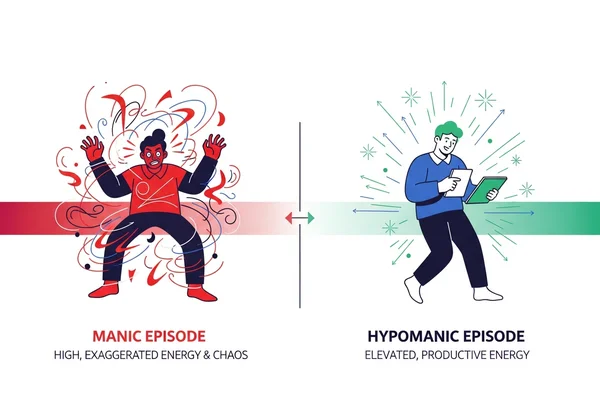
A manic episode is a period of abnormally elevated, expansive, or irritable mood that lasts for at least one week and is present most of the day, nearly every day. The key word here is severe. Mania significantly impairs your ability to function in your social life, at work, or at school.
During a manic episode, a person might experience:
- An inflated sense of self-esteem or grandiosity.
- A decreased need for sleep (e.g., feeling rested after only three hours).
- Being much more talkative than usual or feeling pressure to keep talking.
- Racing thoughts or a flight of ideas.
- Extreme distractibility.
- A major increase in goal-directed activity or physical restlessness.
- Engaging in activities with a high potential for painful consequences, such as unrestrained spending, foolish business investments, or sexual indiscretions.
Severe manic episodes may require hospitalization for safety. They can also involve psychotic symptoms like delusions or hallucinations.
What is Hypomania and How Does It Differ?
Hypomania is a less severe form of mania. The symptoms are similar, but they are not intense enough to cause major problems in daily life or require hospitalization. A hypomanic episode must last for at least four consecutive days.
While others might notice a change in your mood or behavior, you may still be able to go to work or manage your daily responsibilities. For many, hypomania can even feel productive or creative. You might feel exceptionally energetic, sociable, and full of ideas.
The main difference is the degree of impairment. Mania disrupts your life; hypomania is a noticeable change from your usual self but doesn't cause the same level of breakdown. A hypomanic episode, by definition, does not include psychotic features.
Why Distinguishing Between Them Matters for Your Health
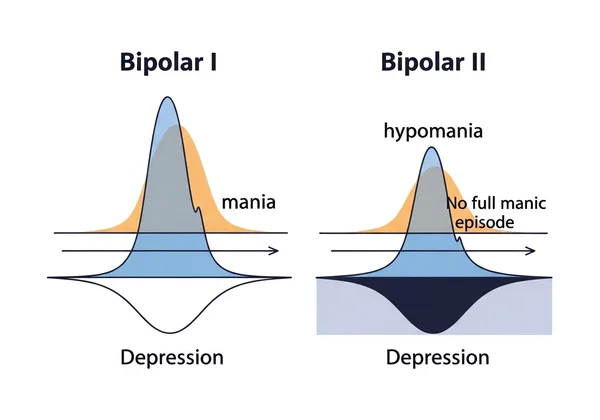
Understanding the difference between mania and hypomania is incredibly important because it is the primary factor that distinguishes between the main types of bipolar disorder. A history of at least one manic episode points to a diagnosis of Bipolar I Disorder. A history of hypomanic episodes and major depressive episodes (but never a full manic episode) points to Bipolar II Disorder.
This distinction directly influences the path to getting the right support and treatment. By recognizing your own patterns, you can provide more accurate information to a healthcare professional. A clear understanding of your symptoms supports a proper evaluation. If you’re unsure about your experiences, an online bipolar disorder test offers a structured starting point.
Bipolar 1 vs. Bipolar 2: Key Symptom Differences
Now that we've covered mania and hypomania, let's look at how they define the two most common types of bipolar disorder. While both involve mood swings, the nature of the "highs" creates a very different lived experience. Learn more about the full range of bipolar disorder symptoms and subtypes.
The Intensity of Bipolar I Disorder
The defining feature of Bipolar I Disorder is the presence of at least one manic episode. That’s it. A person with Bipolar I may also experience hypomanic and major depressive episodes, but the manic episode is the key diagnostic marker.
The highs in Bipolar I are severe and can lead to significant consequences, from financial ruin to damaged relationships. The lows often involve major depressive episodes that can be equally debilitating, making it difficult to function at all. The dramatic contrast between these extremes often requires professional support to manage.
The Subtlety of Bipolar II Disorder
Bipolar II Disorder is defined by a pattern of at least one hypomanic episode and at least one major depressive episode. Individuals with Bipolar II have never had a full manic episode.
The subtlety of Bipolar II can make it difficult to recognize. Because hypomania can feel good—like a burst of energy and confidence—many people don't identify it as a problem. Instead, they often seek help for the debilitating depression that follows. It is common for Bipolar II to be misdiagnosed as major depressive disorder if the hypomanic episodes are overlooked.
Navigating the Bipolar Spectrum: Beyond Just I and II
It's also helpful to know that bipolar disorder exists on a spectrum. Another related condition is Cyclothymic Disorder, or cyclothymia. This involves numerous periods with hypomanic symptoms and periods with depressive symptoms that last for at least two years.
However, the symptoms are not severe enough to meet the criteria for a full hypomanic or major depressive episode. Cyclothymia is often described as a more chronic but less intense form of mood cycling. Understanding this spectrum shows that many different experiences of mood fluctuation exist.
How to Identify Hypomania: Signs and Self-Awareness
Since hypomania can be subtle, learning to recognize its signs is a powerful tool for self-awareness. It's often the first step toward understanding a larger pattern that may have gone unnoticed for years.
Common Signs of a Hypomanic Episode
Think of a hypomanic episode as a noticeable shift from your typical self. If you or your loved ones observe these changes lasting for several days, it might be worth paying closer attention.
Common signs include:
- Elevated Mood: Feeling unusually happy, optimistic, or euphoric.
- Increased Energy: Having a surplus of energy despite needing less sleep.
- Heightened Productivity: Taking on multiple projects at once and feeling very driven.
- Increased Sociability: Being more talkative, outgoing, and socially bold.
- Racing Thoughts: Your mind feels like it's moving much faster than usual.
- Irritability: Sometimes, the high energy can manifest as agitation or impatience.
- Increased Confidence: Feeling a strong sense of self-esteem and capability.
If several of these signs appear together and represent a clear change from your normal state, it could be a hypomanic episode.
Tracking Your Moods: A Tool for Self-Recognition
One of the most effective ways to build self-awareness is to track your moods. This doesn't have to be complicated. You can use a simple notebook, a calendar, or a mood-tracking app on your phone.
Each day, take a moment to rate your mood, energy level, and hours of sleep. Over time, you may begin to see patterns emerge—connections between your sleep, energy, and emotional state that you hadn't noticed before. This log can be an invaluable resource if you decide to speak with a healthcare provider, and our mood-tracking guide can help you get started.

When to Consider a Screening Test Like Ours
If you read through the signs of hypomania and they feel familiar, it can be a confusing and even scary realization. But knowledge is power. The next step isn't to jump to conclusions, but to gather more information in a structured way.
This is where a screening tool can be incredibly helpful. It provides a confidential, pressure-free environment to answer questions based on established psychiatric screening principles. It can help you organize your thoughts and see if your experiences align with the key indicators of bipolar disorder. If you're ready to take that step, you can take a free test on our website.
Empowering Your Journey: Taking the Next Step with Clarity
Understanding the difference between mania and hypomania is more than just learning definitions—it's about gaining the language to describe your own unique experience. Mania is a severe mood disturbance that disrupts your life, while hypomania is a less intense high that can be easily missed. This distinction is the key to understanding the difference between Bipolar I and Bipolar II.
This knowledge empowers you to observe your own patterns with more clarity. It helps you move from confusion and uncertainty toward informed action. Recognizing these signs in yourself is a courageous first step on the path to mental wellness.
Ready to gain more clarity on your mood patterns? Take our fast, confidential test today. It is a simple, secure tool designed to help you understand your experiences and provide a foundation for your next steps.
Frequently Asked Questions About Bipolar Episodes & Testing
What are the key differences between mania and hypomania?
The main differences are severity, duration, and impairment. Mania is severe, lasts at least one week, and significantly impairs social or occupational functioning. It may require hospitalization or involve psychosis. Hypomania is less severe, lasts at least four days, and is a noticeable change but doesn't cause major life disruption.
Can an online test diagnose bipolar disorder?
No, an online test cannot provide a medical diagnosis. Tools like the one on our website are screening questionnaires designed to help you identify potential signs of bipolar disorder based on your self-reported symptoms. A formal diagnosis can only be made by a qualified healthcare professional after a comprehensive evaluation.
What are some common signs of bipolar disorder?
Common signs include extreme mood swings that range from the emotional highs of mania or hypomania to the lows of major depression. During highs, you might experience elevated energy, racing thoughts, and decreased need for sleep. During lows, you may feel overwhelming sadness, fatigue, and a loss of interest in activities. Exploring these symptoms with our screening questionnaire can provide a structured overview.
When should I seek professional help for mood swings?
You should consider seeking professional help if your mood swings are causing significant distress or negatively impacting your relationships, work, or overall quality of life. If you have thoughts of harming yourself or others, please seek immediate help by contacting a crisis hotline or emergency services. Talking to a doctor or therapist is a crucial step toward getting the support you deserve.