Online Psychiatric Evaluation: What to Expect Before You Book
Searching for an online psychiatric evaluation can happen when your mind feels hard to sort through. Maybe your mood has been changing quickly, your sleep is off, or you keep wondering whether a mental health assessment online could help you explain what is going on. An online visit with a licensed mental health professional may be a practical way to discuss symptoms, history, safety, and next steps. Before that appointment, an educational tool such as a free bipolar screening resource can help you organize mood-pattern observations. It is not a medical diagnosis, but it can give you clearer notes for a professional conversation.

What an Online Psychiatric Evaluation Usually Means
An online psychiatric evaluation is a structured mental health appointment conducted through telehealth. Instead of meeting in an office, you usually meet by private video or, in some settings, a combination of video, forms, and messaging. The appointment is more comprehensive than a quick psychological evaluation test or a brief mental health assessment test. A professional may ask about your current concerns, mood changes, anxiety, sleep, attention, trauma history, substance use, medications, medical conditions, family history, and how symptoms affect work, school, relationships, and daily routines.
The goal is to understand the whole picture. A psychiatric evaluation for adults may include screening questionnaires, a clinical interview, a review of prior records if available, and a mental status exam. That exam is a structured observation of things such as appearance, speech, mood, thought patterns, attention, memory, and insight. Online care can still capture many of these details through conversation and video, although certain physical or neurological observations may require in-person follow-up.
The word "evaluation" matters. It is different from a self-guided quiz. Online questionnaires can support reflection and help flag topics worth discussing, but a professional evaluation considers context, duration, impairment, risk, medical history, and overlapping conditions.
Online Screening, Assessment, and Evaluation Are Not the Same
Many search results use similar phrases, including mental health assessment online, psychological evaluation test, psychiatric evaluation, and psych evaluation test online free. They can point to different levels of support.
An online screening is usually brief. It may ask standardized questions about symptoms and suggest whether professional support could be worth considering. A screening can be useful when you feel uncertain, but it should not be treated as a final answer.
A self-assessment is broader. It may help you track examples, patterns, and severity over time. A mental health assessment questionnaire PDF, for example, can be helpful if it prompts you to write down dates, symptoms, sleep changes, or triggers before an appointment.
A psychiatric evaluation is a professional process. It is usually performed by a psychiatrist, psychiatric nurse practitioner, or another qualified clinician depending on location and service model. It can lead to a formal diagnosis, a care plan, referrals, therapy recommendations, medication discussion, or further testing when appropriate.
This distinction is especially important for mood concerns. Bipolar disorder, major depression, ADHD, anxiety, PTSD, substance use, and personality patterns can overlap in daily life. A short online result cannot untangle those possibilities by itself.
What Questions Are Asked in a Mental Health Evaluation?
Most evaluations begin with your reason for seeking help. You may be asked what has changed, how long it has been happening, what you have already tried, and what feels most disruptive. If mood swings are part of the concern, the professional may ask about periods of unusually high energy, decreased need for sleep, impulsive decisions, racing thoughts, irritability, depressive lows, or shifts noticed by people close to you.
You may also be asked about safety. This can include questions about self-harm thoughts, suicidal thoughts, aggression, psychosis-like experiences, or situations where judgment feels impaired. These questions can feel direct, but they are a normal part of responsible mental health care.
Other common areas include:
- current medications and supplements
- past therapy, hospitalizations, or evaluations
- medical conditions and sleep patterns
- alcohol or substance use
- family mental health history
- stressors, trauma, work, school, and relationship context
- what support systems you currently have
Before the appointment, it can help to write down mental health assessment examples from your own life: "slept three hours and felt energized for four days," "missed work twice this month," or "felt unusually hopeless after a week of high activity." Specific examples are more useful than trying to find the perfect label.
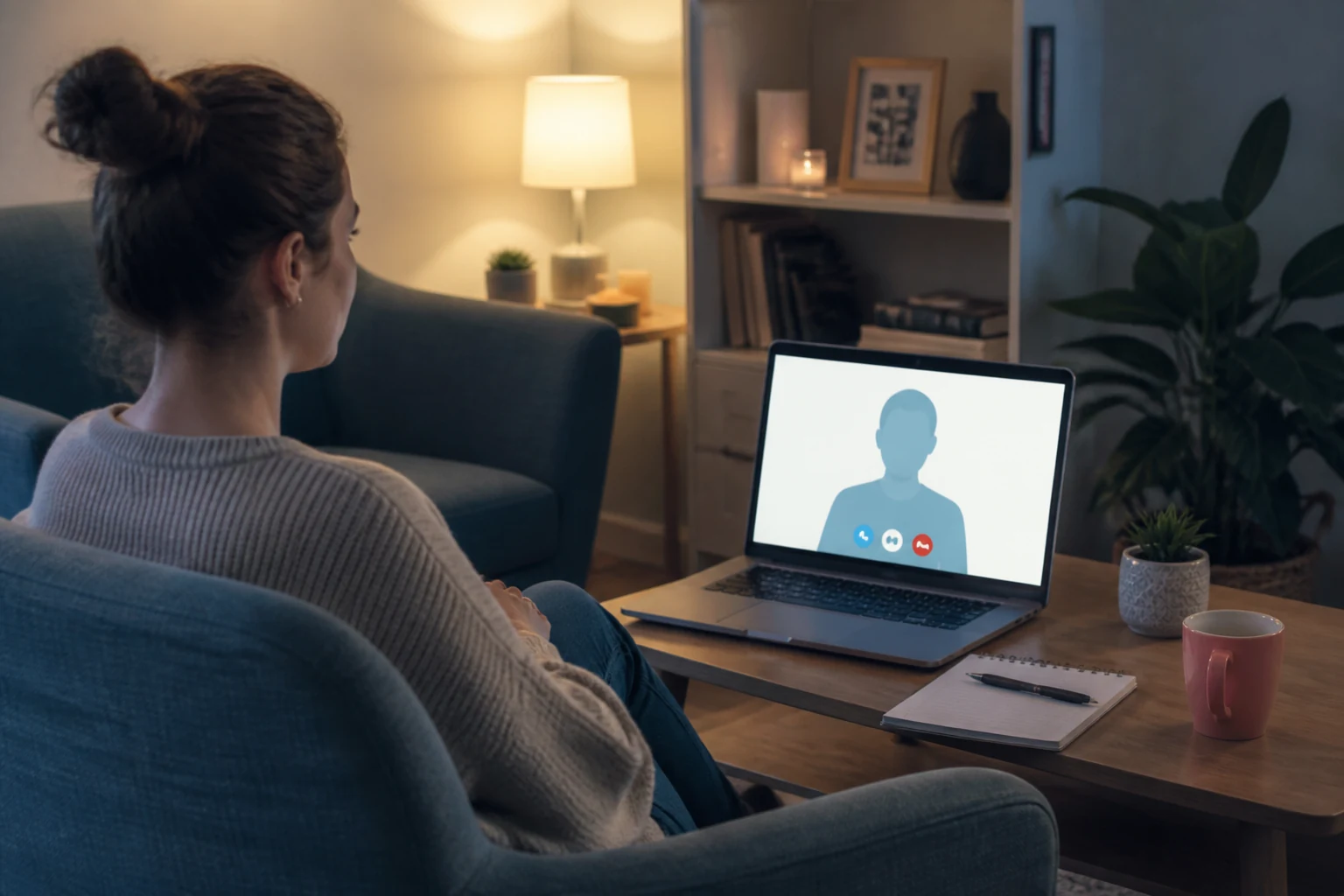
Can You Get a Psych Evaluation Online?
In many places, yes, online psychiatric evaluations are available through telehealth clinics, hospital systems, community mental health centers, and private practices. Availability depends on your location, age, insurance, state or country rules, the provider's license, and the type of concern.
Online care may be a good fit when you have reliable internet, privacy for a video visit, and symptoms that can be discussed safely without immediate hands-on medical care. It can be especially helpful for people who live far from specialists, have transportation barriers, need scheduling flexibility, or feel more comfortable starting from home.
Online care may not be enough when there is immediate danger, severe confusion, intoxication, acute mania, psychosis, medical instability, or risk that requires urgent in-person support. If you might harm yourself or someone else, call emergency services or a local crisis line right away. Do not wait for a routine online appointment.
For bipolar-related concerns, an online professional may still ask detailed questions about mood episodes, sleep, impairment, and family history. They may also recommend in-person care, lab work, collateral information from a trusted person, or ongoing follow-up.
How Online Psychiatric Evaluation Differs From a Bipolar Screening Tool
BipolarDisorderTest.org focuses on educational screening for bipolar disorder signs, using the Mood Disorder Questionnaire and similar recognized screening concepts as a reference point. That makes the site useful when you want a private first step before talking with a professional.
A screening tool may help you notice whether your mood patterns include features often discussed in bipolar disorder education, such as elevated energy, reduced sleep need, impulsive behavior, and depressive periods. The online mood-pattern screening can also make it easier to describe your concerns in plain language.
An online psychiatric evaluation goes further. A professional will consider timing, severity, medical factors, medications, substance use, trauma, anxiety, ADHD, and whether symptoms cause significant impairment. They may ask follow-up questions that a form cannot adapt to. They may also help you decide whether your concern points toward therapy, medical evaluation, ongoing monitoring, crisis support, or a specialist referral.
Think of screening as preparation, not replacement. It can help you arrive with better observations, but the professional evaluation is where those observations are interpreted in context.
How to Prepare for an Online Psychiatric Evaluation
You do not need to prepare perfectly. Still, a few practical steps can make the appointment more useful.
First, choose a private space. Use headphones if possible. Make sure your device is charged and your camera and microphone work. If you are worried about being interrupted, place a note on the door or ask someone you trust to help protect that time.
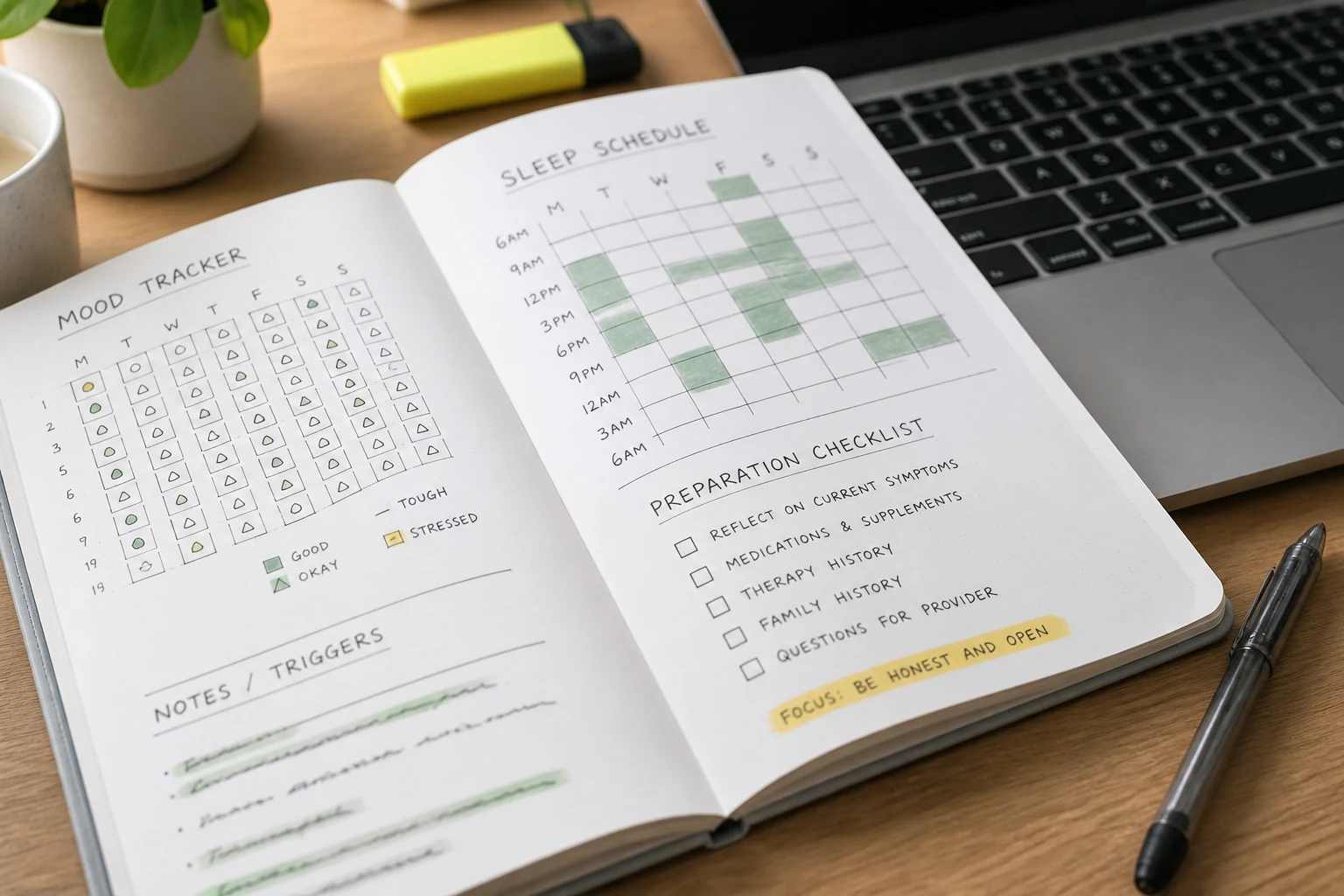
Second, create a short symptom timeline. Write down when the current concern began, whether symptoms come in episodes, how sleep and energy change, and whether the pattern affects work, school, spending, relationships, or safety. If you have mood highs and lows, note both.
Third, list medications, supplements, medical conditions, and past mental health care. Include what helped, what did not, and any side effects or difficult experiences. If you have prior records or lab results, ask the clinic whether they want them before the visit.
Fourth, prepare your own questions. You might ask: What should I track next? What signs mean I should seek urgent care? Should I consider therapy, medication consultation, or additional assessment? How will follow-up work?
Finally, be honest about uncertainty. It is common to search "what is wrong with me mentally" or "what mental illness do I have" when you feel overwhelmed. A good evaluation does not require you to already know the answer.
What Happens After the Evaluation?
After an evaluation, next steps vary. You may receive a clinical impression, a recommendation for therapy, a discussion of medication options, a referral for psychological testing, a request for medical follow-up, or a plan to monitor symptoms over time. If bipolar disorder is part of the concern, follow-up matters because mood patterns can require careful observation across weeks or months.
Sometimes the most helpful outcome is not a single label. It may be a clearer care path: what to track, what risks to watch, which supports to contact, and what to bring to the next appointment. You may also be encouraged to involve a trusted loved one if they can provide helpful observations and you feel comfortable including them.
Keep a copy of your notes after the visit. Write down the professional's recommendations, any warning signs, and the follow-up date. If something is unclear, ask the office how to send a question safely through their portal.
When to Use Screening as a First Step
If your main concern is mood cycling, a screening can be a gentle way to organize your thoughts before scheduling care. It can help you notice patterns, name examples, and decide what questions to ask. The bipolar self-reflection tool is designed for this kind of early exploration: private, educational, and supportive.
Use screening results thoughtfully. Bring them to a professional if they reflect patterns that worry you, but avoid treating them as proof. If your symptoms are intense, risky, or rapidly changing, seek professional or urgent support instead of relying on self-assessment.
An online psychiatric evaluation can be a meaningful next step when you need a fuller conversation about symptoms, history, safety, and care options. You deserve support that looks at the whole person, not just a score.
FAQ
Can I get a psych evaluation online?
Often, yes. Many licensed mental health professionals offer evaluations through telehealth systems with privacy safeguards. Access depends on location, provider licensing, age, insurance, and clinical needs. Some concerns may still require in-person evaluation or urgent care.
Where can I get a free online psychology evaluation?
Free online screenings are easier to find than full professional evaluations. Screenings can help you reflect on symptoms, but they are not the same as care from a licensed professional. Community clinics, universities, nonprofit programs, and public health services may offer low-cost evaluation options.
Can an online psychiatrist make a formal diagnosis?
In many settings, a properly licensed psychiatric professional can make a formal diagnosis through telehealth when the evaluation is clinically appropriate. Some situations still need in-person assessment, records, lab work, or emergency support.
What is the difference between a mental health assessment and a psychiatric evaluation?
A mental health assessment can be a broad term for questionnaires, screenings, interviews, or intake forms. A psychiatric evaluation is typically a professional clinical process that reviews symptoms, history, safety, functioning, and care options in more depth.
What should I bring to an online psychiatric evaluation?
Bring a symptom timeline, medication list, medical history, prior mental health records if available, and examples of how symptoms affect daily life. It also helps to prepare questions about follow-up, safety planning, and what to track next.
Is an online psychiatric evaluation enough for bipolar disorder concerns?
It may be a helpful starting point, especially when conducted by a qualified professional. Bipolar-related concerns often require careful discussion of mood episodes, sleep, energy, impairment, and history. Some people need ongoing follow-up or in-person care.
When should I seek urgent help instead of booking online?
Seek urgent help immediately if you may harm yourself or someone else, feel unable to stay safe, are severely confused, or have symptoms that feel out of control. Call emergency services or a local crisis line rather than waiting for a routine appointment.